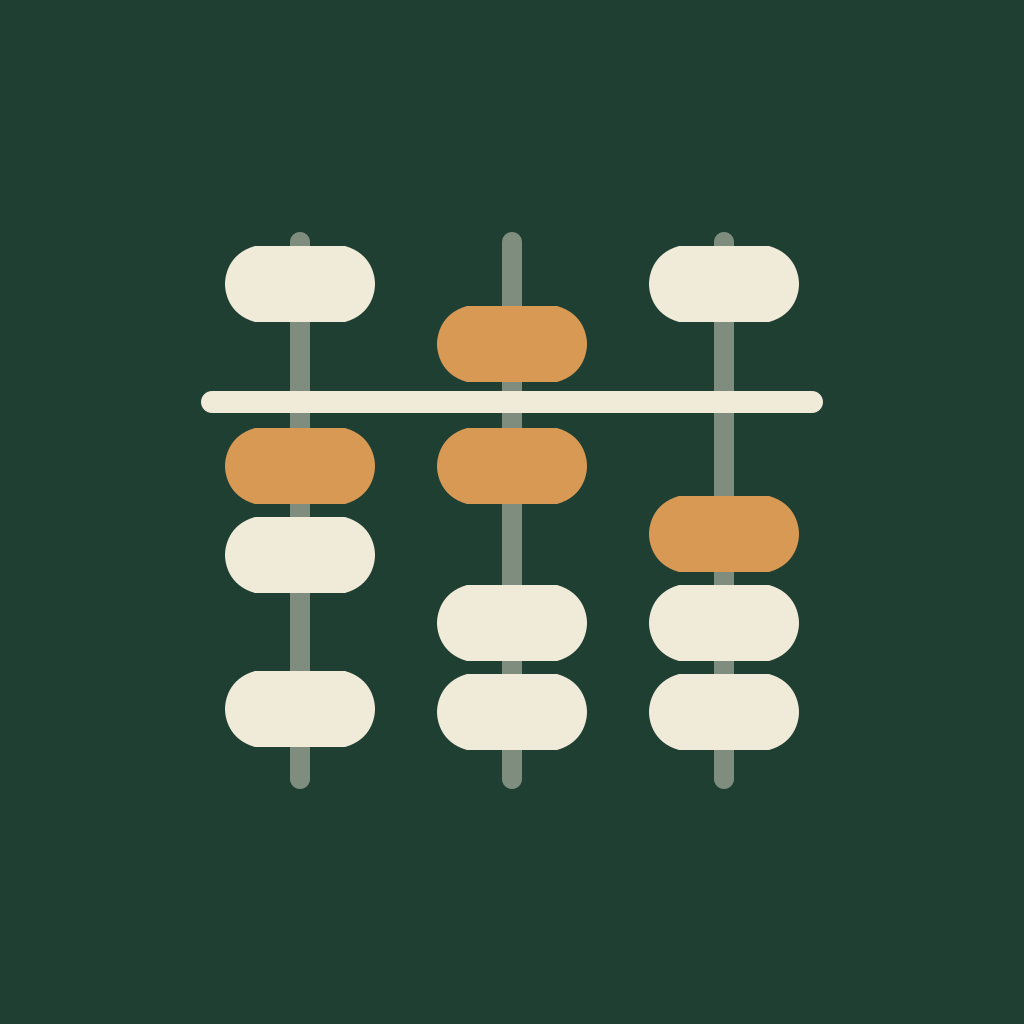
Mental abacus is not a trick that begins in the imagination. It grows from a reliable physical model: knowing what each bead means, making each movement consistently, and seeing how arithmetic changes the frame. The mental picture becomes useful because your hands and eyes built it first.
Start with a frame you can control
Learn the beam, upper and lower beads, place value, and the shape of numbers. Use a small rod count while the mechanics are new. Build and read values until you can recognize common patterns without recounting every bead.
Connect each movement to a finger
Finger training gives calculation a repeatable rhythm. Practice the indicated hand, finger, and direction slowly. A relaxed correct movement is more valuable than a fast inconsistent one because it gives visualization a stable sequence to remember.
Say what changed
When a bead moves, name the value change: plus one, minus five, carry one ten. This links the physical action to arithmetic language. Optional system narration can reinforce the step, but your visual understanding should remain primary.
Fade the frame gradually
Do not jump from a fully visible Soroban to a blank screen. Use stages that reduce visual support a little at a time. If the mental picture becomes unreliable, return to the previous stage or repeat the same exercise with physical beads.
Visualization is recall built on movement, not a substitute for learning the movement.
Use Flash Anzan after number images are stable
Begin with fewer numbers, one digit, and a generous interval. Increase only one variable at a time: number count, digits, speed, or mixed signs. A difficult session should reveal the next practice target, not erase confidence.
Keep daily practice short and specific
A compact routine can combine one lesson, one finger drill, one arithmetic set, and a brief visualization or Flash Anzan session. Stop while attention is still good. Consistent focused sessions create a better signal than occasional long ones.
Review the pattern, not just the score
Look at accuracy, practice time, difficult skill areas, reaction consistency, and personal records together. A slower session with cleaner movement can be meaningful progress. Use the next lesson or drill to address what the record actually shows.