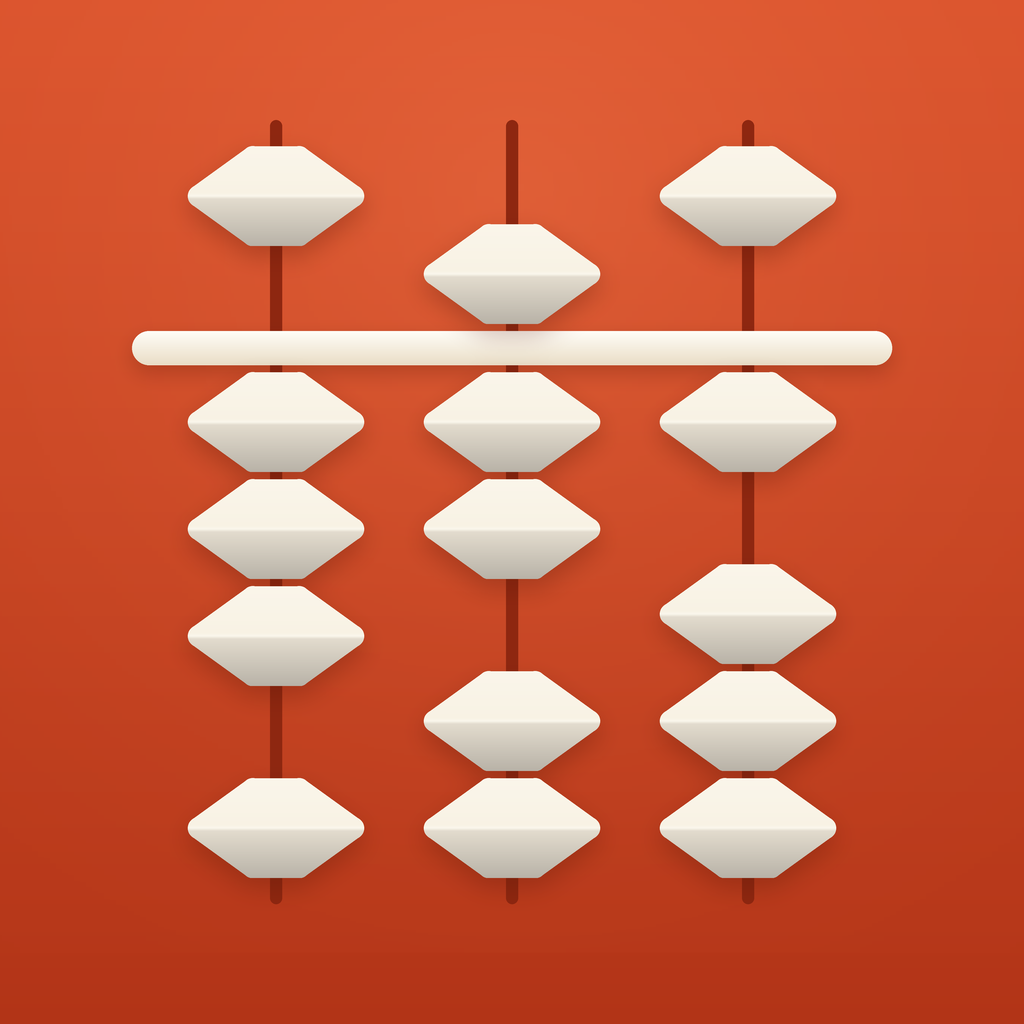
A Soroban can look busy until you learn what counts. Each vertical rod represents one place value. Beads touching the horizontal beam are active; beads resting away from the beam are not. Once that rule becomes familiar, the frame starts reading like a number instead of a collection of parts.
Begin with the ones rod
On a standard right-aligned frame, the rod at the right represents ones. The next rod to the left represents tens, then hundreds, thousands, and so on. The exact number of visible rods can change, but the place-value relationship remains the same.
Know what each bead is worth
The single upper bead is worth five units of its rod when it touches the beam. Each lower bead is worth one unit when it touches the beam. A lower bead never changes value because of its position on the rod; the rod's place value supplies the scale.
Make zero first
Clear the frame so every bead rests away from the beam. This gives your eyes and fingers a consistent starting point. In Abacus, use Clear whenever you want to reset the frame without guessing whether a bead is active.
Build one through four
Move one lower bead to the beam for 1, then a second for 2, a third for 3, and a fourth for 4. Move the beads together rather than scattering them. A tidy stack makes the value easier to recognize at a glance.
Use the upper bead for five
Return the lower beads and move the upper bead toward the beam. That is 5. Keep the upper bead active and add lower beads to make 6, 7, 8, and 9. Ten does not fit on the ones rod, so it becomes one lower bead on the tens rod.
The Soroban turns carrying into a visible movement between rods.
Practice reading before speed
Build a number, hide the displayed total, and say the value from the bead pattern. Then reverse the exercise: read a number and construct it. Accuracy and consistent movement matter more than racing the clock at this stage.
Let lessons introduce technique in order
Friends of 5 and Friends of 10 are easier when the basic frame already feels familiar. Use the guided demonstrations, replay a step when needed, and let ghost beads support the movement before practicing independently.